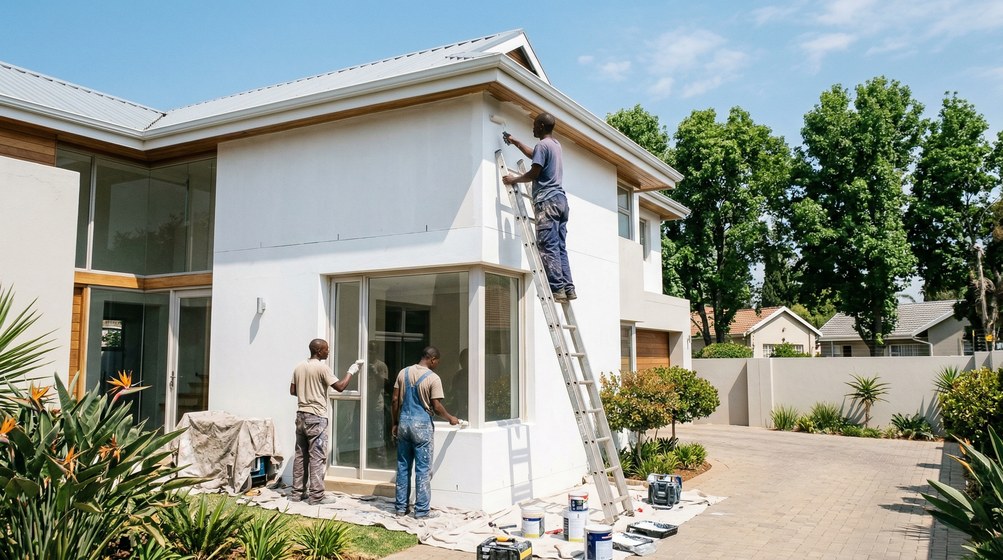
- Get a free quote from 5-Star reviewed Great Brak River painters
- Timber windows and doors priced per unit so you can see exactly what each one costs
- Honest advice on sealer versus enamel - they suit different situations and cost very different amounts to maintain
Painting in Great Brak River
Great Brak River has a far higher proportion of timber in its building stock than the surrounding areas - wooden window frames, doors, fascias, pergolas and cladding are everywhere. That matters because timber and masonry run on completely different maintenance cycles. Walls here will comfortably go six or seven years between repaints. The timber will not, and treating them as one job leads to either over-painting the walls or neglecting the wood until it is too far gone.
The river valley adds shade and moisture to the equation. Timber that stays damp and shaded degrades much faster than the same timber in an open sunny position, and the shaded elevations here are where rot generally starts. The practical approach in Great Brak is to plan the timber on its own two-to-three year cycle and let the walls run their longer course independently.
What Painting Costs in Great Brak River
| Work | Indicative price |
|---|---|
| Timber window, sand back and reseal (standard size) | R450 - R900 / unit |
| Timber window, full strip back to bare wood | R900 - R1 800 / unit |
| Timber door, strip, seal and finish both sides | R1 100 - R2 400 / unit |
| Timber cladding and fascias, sand and reseal | R150 - R260 / m² |
| Exterior walls, 2 coats over prepared surface | R80 - R125 / m² |
| Interior walls and ceilings, 2 coats | R58 - R90 / m² |
| Roof: clean, prime and 2 coats | R100 - R155 / m² |
| Typical timber-framed house, walls plus all timber joinery | R30 000 - R55 000 |
Timber is priced per unit rather than per square metre because the labour varies enormously with condition. A frame that needs a light sand and two coats is a fraction of the cost of one that has to be stripped back to bare wood, and averaging them across a house hides where your money is actually going. All figures are indicative ranges to help you budget and compare quotes - a firm price needs a site visit, because wall area and surface condition drive the cost more than anything else.
When to Paint in Great Brak River
Timber work needs consecutive dry days, and that is the thing that shapes the calendar here. Wood has to be genuinely dry before sealing - sealing over damp timber traps the moisture and causes the finish to cloud and lift. In a shaded river valley, timber takes longer to dry out after rain than it does on an open site.
February and the May-to-July window are the most dependable stretches. The wetter periods run March into April and again October into November, and those are poor months to start timber work because a half-stripped frame left exposed to rain is worse off than it was before you touched it.
Wall painting is more forgiving and can be scheduled more loosely. If you are doing both, the sensible sequence is timber first in the driest available window, then walls afterwards - not the other way round.
Sealer or Enamel on Timber
This is the decision that determines your maintenance costs for the next decade, and it is worth thinking about properly rather than defaulting to whatever is already on there.
A penetrating exterior timber sealer keeps the grain visible and soaks into the wood. It wears back gradually rather than peeling, so maintenance means cleaning and recoating rather than stripping. The trade-off is frequency: on exposed elevations expect a maintenance coat every two to three years, and on the shaded river-facing sides sometimes sooner.
An enamel or opaque timber paint gives you a much longer interval - five years or more is realistic - because the pigment blocks the UV that breaks sealers down. The trade-off is that you lose the grain, and when it eventually does fail it fails by cracking and peeling, which means a full strip rather than a light sand. It is the right choice if you want low maintenance and are happy with a painted finish.
Whichever you choose, the end grain matters more than the face. Cut ends and the bottom rails of doors and frames absorb far more moisture than anywhere else, and sealing them properly is what prevents rot starting where you cannot see it.
Never seal or paint over timber that already has rot. Soft, spongy sections need cutting out and replacing first. Coating over rot hides it for a season while it continues spreading into sound wood behind the finish.
Services We Cover in Great Brak River
- Interior painting
- Exterior painting
- Roof painting
- Waterproofing
- Damp proofing
- Anti-rust coatings
- Plaster repairs
- Wood staining and sealing
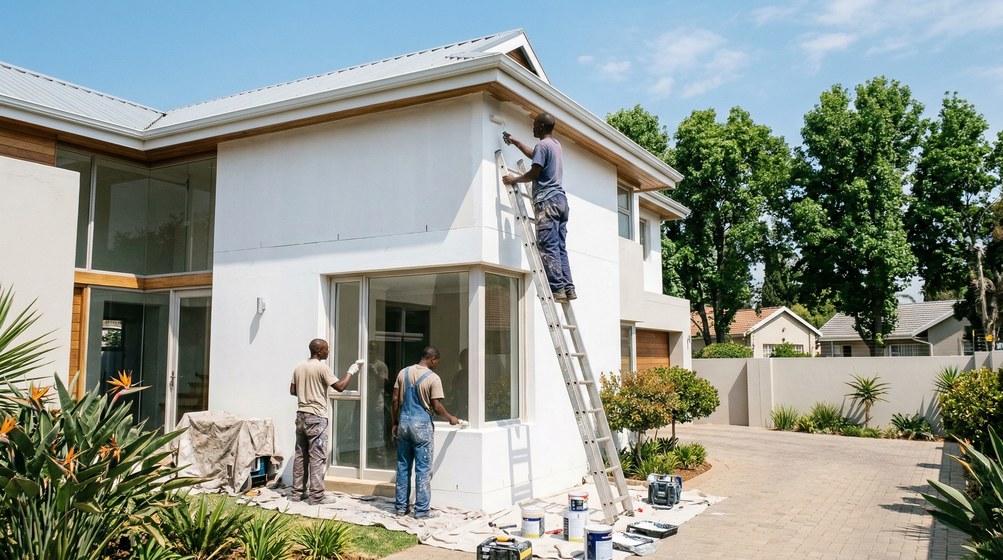
Great Brak River Painting Questions
Painting a home in Great Brak River? Contact Painters Mossel Bay for a free, no-obligation quote from painters who work in this area every week.
painters Great Brak River, timber window painting Great Brak, wood sealing Great Brak River, wood staining Mossel Bay
Get a Free Quote in Great Brak River →5-Star Reviews
Powered by leaderr